
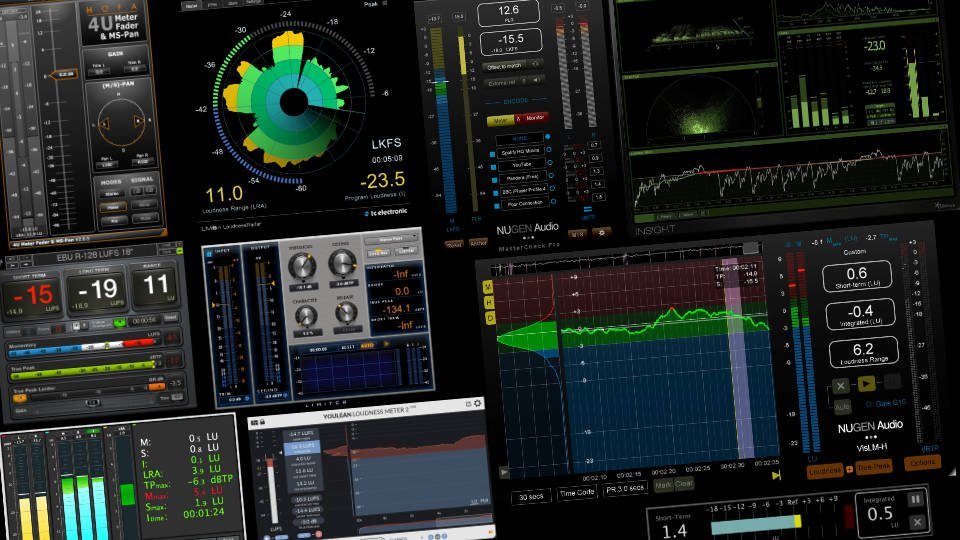







Recently there has been some discussion with folk starting to mix using an R128 loudness meter. Some have experimented with recording an uncompressed voiceover at BBC PPM6 and finding it is a couple of dBs louder than the R128 spec of -23. In response I mixed two 30 minute speech based documentaries for Radio 4 yesterday and I put an R128 loudness meter across it and found I got a figures of -24 overall. So maybe the latest TC Electronic newsletter where they released details of more videos from the Rome Calling loudness seminars held in the summer might help. Also some of the videos already released have been re-released as full length videos rather than in 10 minute sections. If you have an interest in loudness then these will be very informative and educational.
Online Loudness Seminars
Rome Calling was 2011′s unique audio event, focusing on new standards and applications. The speakers at the seminar in Rome included such capacities as George Massenburg, Simone Corelli, Florian Camerer, Alessandro Travaglini, Richard van Everdingen, Bob Katz and Thomas Lund. The first day of the seminar focused on post-production, while the second day concentrated on professional broadcasting and particularly the radical changes happening in production and distribution of broadcast, film and music as a consequence of new ITU and EBU standards. For example, the groundbreaking and comprehensive EBU R128 loudness recommendation was investigated from a multitude of angles, as was the just updated ITU-R BS.1770-2 broadcast standard.
TC Electronic has gathered some of the industry’s most influential speakers in order to cover, from a multitude of angles, the radical changes now taking place in production and distribution of broadcast, film and music as a consequence of the new ITU and EBU standards and recommendations. The presentations focus strictly on practice, theory and technology rather than specific products.
Florian Camerer gives an introduction to the European Broadcasting Union’s R128 Broadcast Standard and speaks in general about perceived loudness, peak normalization, loudness normalization, etc.
Thomas Lund points out the pitfalls of data reduction, digital audio processing and sample peak metering in contemporary music production, distribution and playback – often exemplified by so-called hyperpop productions, a controversial trend characterized by obnoxious loudness and extremely narrow dynamics. Conversely, Lund also demonstrates the advantages of adopting loudness metering standards like EBU R128 to counteract such symptoms and deliver lively dynamics and consistent loudness levels regardless of genre, production method and distribution formats.
The EBU R128 Loudness Recommendation provides a robust and versatile framework for assessing the loudness of a wide range of different sources. In this talk, Thomas Lund demonstrates its deployment in a variety of production and transmission scenarios, explains terms like LU and LUFS and compares it with previous loudness standards and recommendations, e.g. BS. 1770-2 and A/85.
Sound designer and audio engineer Alessandro Travaglini explains the challenges of maintaining consistent loudness levels in television broadcasting when faced with a wide variety of content – from cinema productions to live feeds – and proposes workflow solutions to dealing with various formats and avoiding pitfalls like excessive compression.
Richard van Everdingen talks about loudness normalization in connection with distribution, taking into consideration the broadcasted signals as well as the end-users’ reception devices and how it affects overall loudness.
Since the advent of television advertising, excessively loud commercials have been symptomatic of the absence of technical and legislative approaches to ensuring consistent loudness levels in broadcast media. Holding up recent viewer surveys and loudness measurements against various existing legislation, Dr. Mauro Falcone identifies the shortcomings of the latter and suggests methods for more reliable and consistent monitoring of broadcast channels.